SQUID & BUTTERFLY FASCINATING INVERTEBRATES
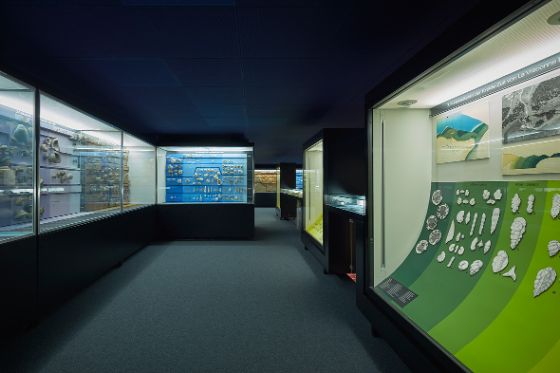
Invertebrates do not have a bony skeleton. Their striking appearance is often shaped by an exoskeleton as is the case with insects, or a shell system as found in mussels and snails. However they can also be soft and mobile, like worms. The exhibition offers an overview of the enormous diversity of invertebrates.
Sponges, jellyfish, snails, mussels and crabs are as much part of our exhibition as millipedes, spiders and insects.
In addition to display cases showing the diversity of invertebrates, some showcases feature thematic contents such as pests and useful creatures found in forests and gardens.
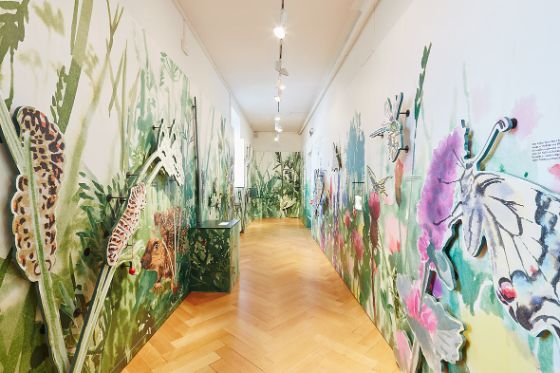
The impressive model of a giant squid, as well as the 1:100 scale model of a spider, enhance the exhibition together with two showcases which house butterflies and snails from purely aesthetic perspectives.
A display case containing scorpions showcases these famously defensive arachnids in their natural habitat – so lifelike that some museum visitors fear a scorpion might dart away at any moment.
The impressive model of a giant squid and that of a spider magnified a hundredfold enhance the exhibition, as do two display cases showcasing butterflies, beetles and snails purely for their aesthetic appeal.
At the entrance to the exhibition, live animals have a special appeal: the honey bees in the display case offer a glimpse into the inside of a beehive. In addition, details about the life of the honeybee are presented in a way that is particularly engaging for children.
In autumn 2025, the exhibition was expanded to include three display cases showcasing the latest research findings on 40-million-year-old Darwin wasps from the Baltic Amber Forest. The wasps offer unique insights into a bygone world and demonstrate how current research is conducted at our museum.